

HANSON - March 19, 2026 - Library Director Karen Stolfer presented a comprehensive vision for a $33 million renovation and expansion of the Hanson Public Library, warning residents that the current 36-year-old facility is “busting at the seams.” With a state grant poised to cover approximately $12.5 million of the costs, officials are framing the project as a critical investment to correct structural failures and meet the community’s needs for the next 30 years. The proposal, which would triple the library’s footprint to 23,000 square feet, faces a decisive vote at the upcoming May Town Meeting and a subsequent ballot question for a debt exclusion.
Free article: To read all South Shore News articles, subscribe below
The Full Story
The forum, held at the Hanson Senior Center, served as a final push for public education before voters head to the polls in May. Director Stolfer laid out a timeline that began in 2018, noting that the state has already recognized Hanson’s project as a top priority. In January 2025, the Massachusetts Board of Library Commissioners (MBLC) ranked Hanson first among all medium-sized library applicants for its construction grant program [04:24].
“The state determined that our need was the greatest out of all the applicants,” Stolfer told the audience, citing the “excessively small” children’s room and chronic facility failures [04:36]. The proposed design, crafted by Oudens Ello Architecture, envisions a 14,676-square-foot addition that would wrap around the existing structure, leaving the current library space primarily for adult services while creating dedicated wings for children and teens [13:25].
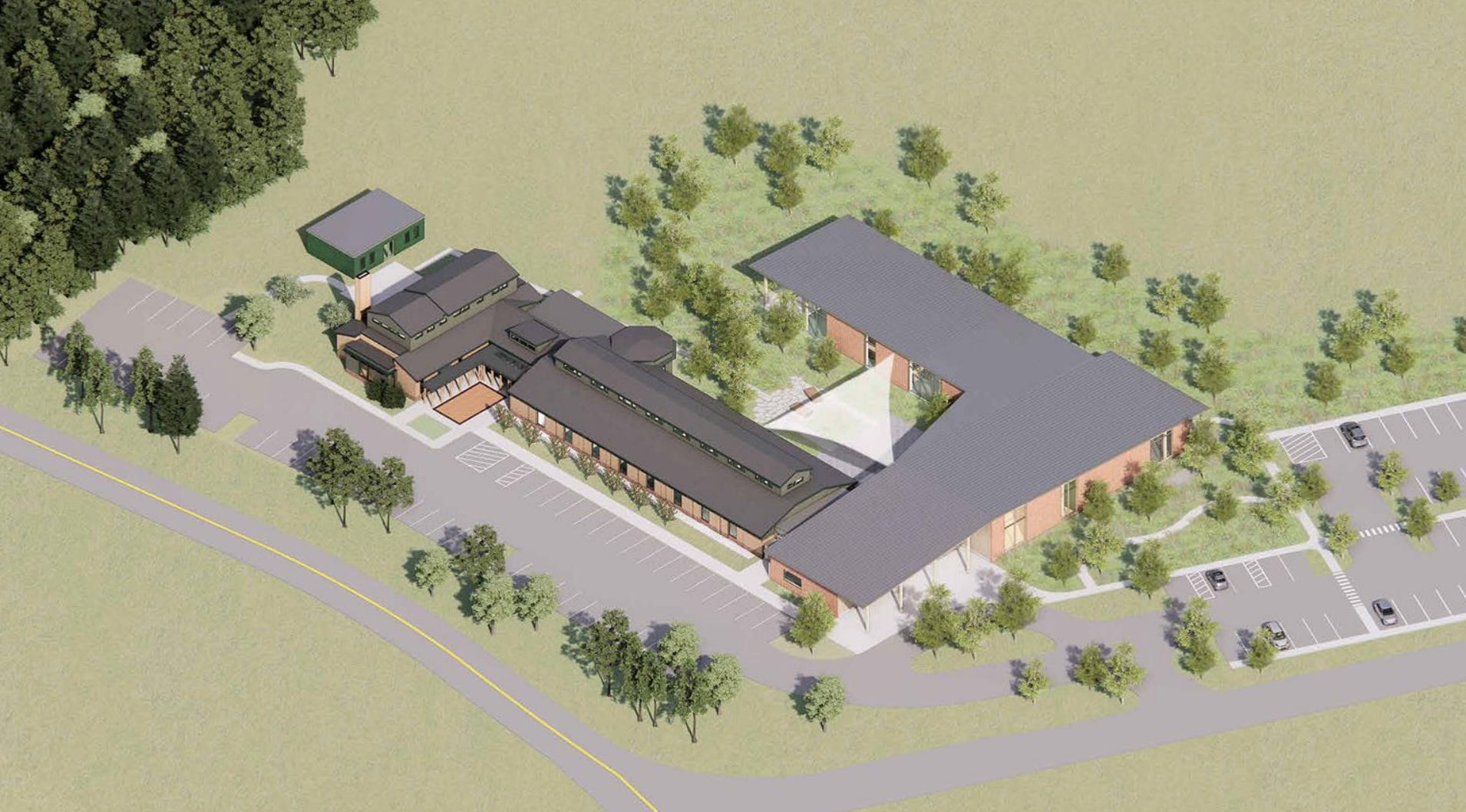
Structural Failures and “The Cost of Doing Nothing”
A significant portion of the presentation focused on the deteriorating state of the current building, which was constructed in 1990 without state aid because the design was deemed too small even then [06:34]. Stolfer shared images of buckets in the basement catching water from ongoing roof leaks and described an HVAC system that is “constantly in need of repair” [06:14].
Officials emphasized that “doing nothing” is not a zero-cost option. Deferred maintenance, including HVAC replacement, roof repairs, and ADA compliance upgrades, is estimated to cost taxpayers millions of dollars—costs that would be borne entirely by the town without the benefit of the 50% state reimbursement offered through the construction grant [26:23].
Financial Breakdown and Tax Impact
The total project cost is estimated at $33,037,515. However, the net cost to Hanson taxpayers will be reduced by several funding sources:
MBLC Construction Grant: $12,586,791
Private Fundraising/Foundation Support: The Hanson Public Library Foundation has already expended over $58,000 on planning and design and plans a major capital campaign to further offset the town’s portion [10:09].
Green Initiative Bonus: The project is eligible for an additional 3% grant bonus (approximately $600,000) by meeting sustainable building standards [27:33].
While the final tax impact figures are still being “crunched,” Stolfer noted that the town’s share would likely hover around $13 to $15 million after all grants and private funds are applied [24:57].
Community Vision: More Than Just Books
The proposed expansion isn’t just about shelving. The new layout includes a community meeting room capable of seating 120 people, which can be cordoned off for after-hours use by local organizations [14:04]. Other features include:
Three individual study rooms [13:57]
An outdoor reading garden and learning center [14:42]
A dedicated teen center to accommodate the “dozens” of students who currently crowd the library after school [40:36]
Modernized technology infrastructure and a “warming/cooling center” capability for town emergencies [17:35].
“If I can get kids to come into the library rather than down the street... this is what we need to do. It’s what the town can do with the space for their young people.” [40:43] — Resident
Why It Matters
For the average Hanson resident, this project represents a choice between paying for a “band-aid” fix of an obsolete building or investing in a modern community hub at a 50% discount. The decision will impact property taxes for years to come via a debt exclusion, but supporters argue that missing this grant cycle could delay necessary repairs by another decade, during which construction costs are expected to climb significantly.
Official Minutes & Data
Key Project Figures (Estimated)
Total Project Cost: $33,037,515 [19:22]
State Grant Award: $12,586,791
Proposed Size: 23,040 Total Square Feet [08:20]
Planning Expenditures to Date: $248,013.86 (Funded by grants and trust funds) [10:01]
Public Comment
Cost Concerns: A resident expressed skepticism regarding the high price tag, asking for strategies to convince voters that the benefits outweigh the money [23:56].
Sustainability: A resident urged the committee to maximize solar exposure and green building techniques to eliminate future utility costs [29:34].
Space Needs: Multiple residents spoke in favor of the project, highlighting the town’s “woeful” lack of meeting space and the intergenerational benefits of the library [38:20].
What’s Next
May 4, 2026 (6:30 PM): Town Meeting Vote. Requires a two-thirds majority to approve project funding and the use of 3 acres of the former Maquan School property [18:07].
May 16, 2026: Town Election. A ballot question will ask voters to authorize a debt exclusion to fund the town’s portion of the project [18:12].
Source Video: Hanson Government TV